thoughtbot · 2019
Buying flowers without a guide
A wedding is booked about a year out. At that point the couple buying the flowers doesn’t know what flowers should cost, which ones will hold up at their venue, how many it takes to fill the room, or what styles there are to choose from. Every florist’s quote depends on those answers.
Poppy Flowers brought thoughtbot a one-week product design sprint in October 2019 to find out whether the business was worth building. Nothing had been built yet. The week ran on thoughtbot’s published sprint method, six phases from Prepare through Test, with one other designer, a developer, the founder and her team. I was the facilitator.
Narrating the week in the open
A facilitator’s job is to be the faithful narrator of the engagement: capture what happens every day, and keep everyone on the same page. I ran the sprint out of a Notion workspace, so the whole week lived in one place the team could reach. The research, the phases and the prototype sat there, and so did every question, assumption and new learning, out in the open where anyone on the team could see them and add to them.
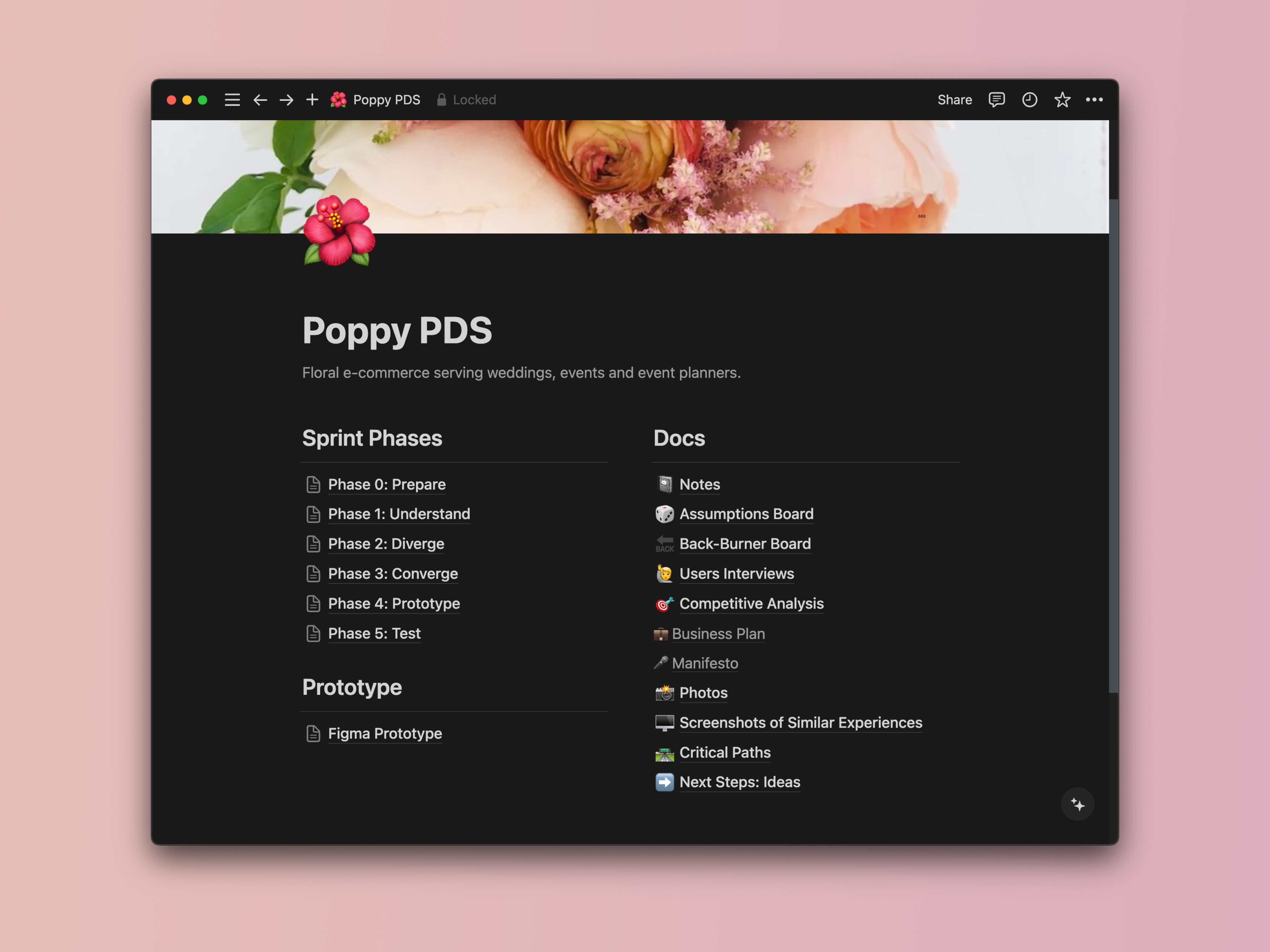
That’s where everyone’s voice gets heard. It also means what the sprint learns, the team learns together, instead of hearing it in a readout at the end.
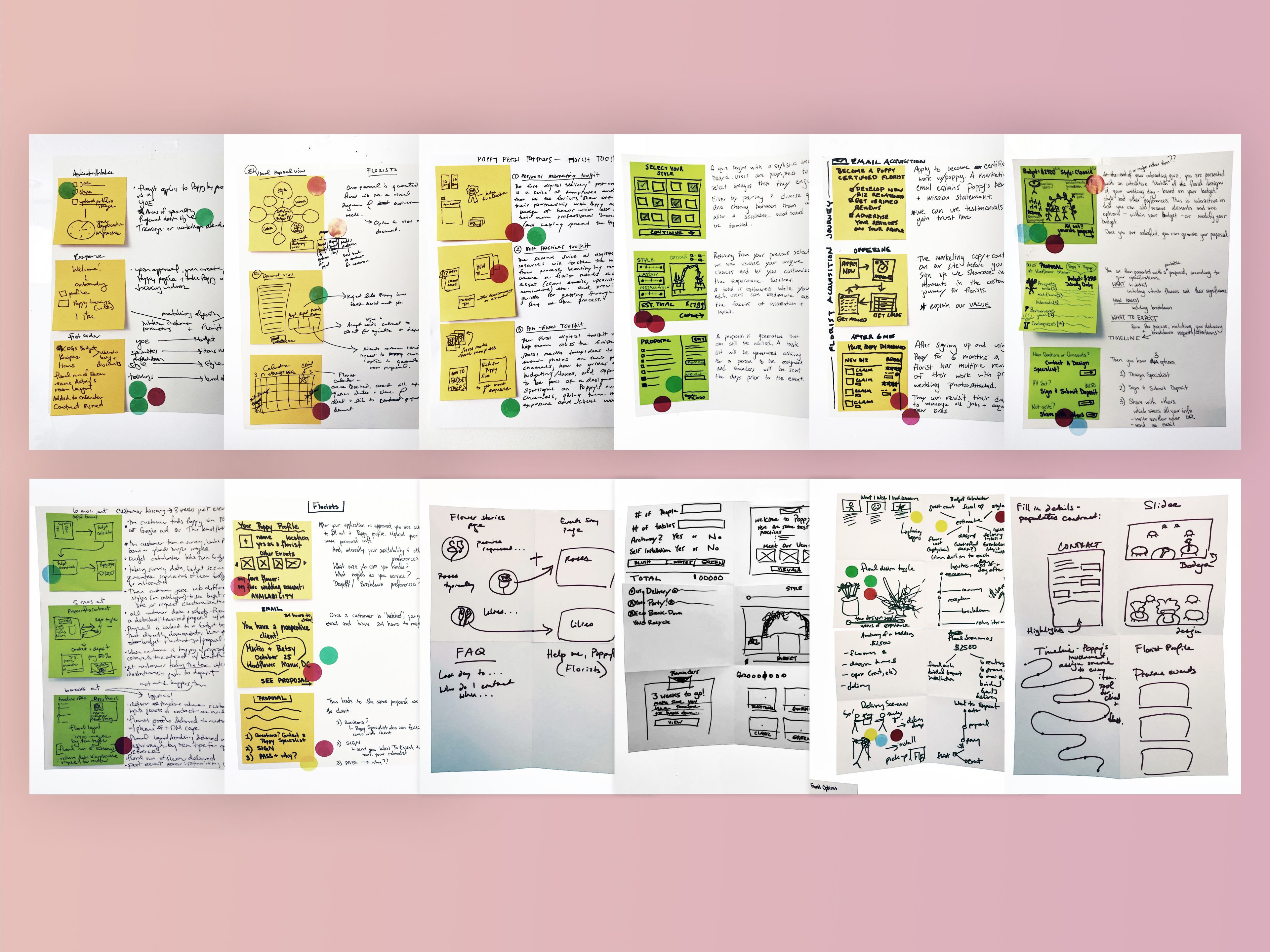
Research came first: the business model, the mission, the market. Then interviews with people planning a wedding and people who had already bought wedding flowers, alongside local florists and a Google Form for the wider floral community. Sketching sessions followed, then a storyboard, and the group converged on one critical path narrow enough to prototype in the days remaining.
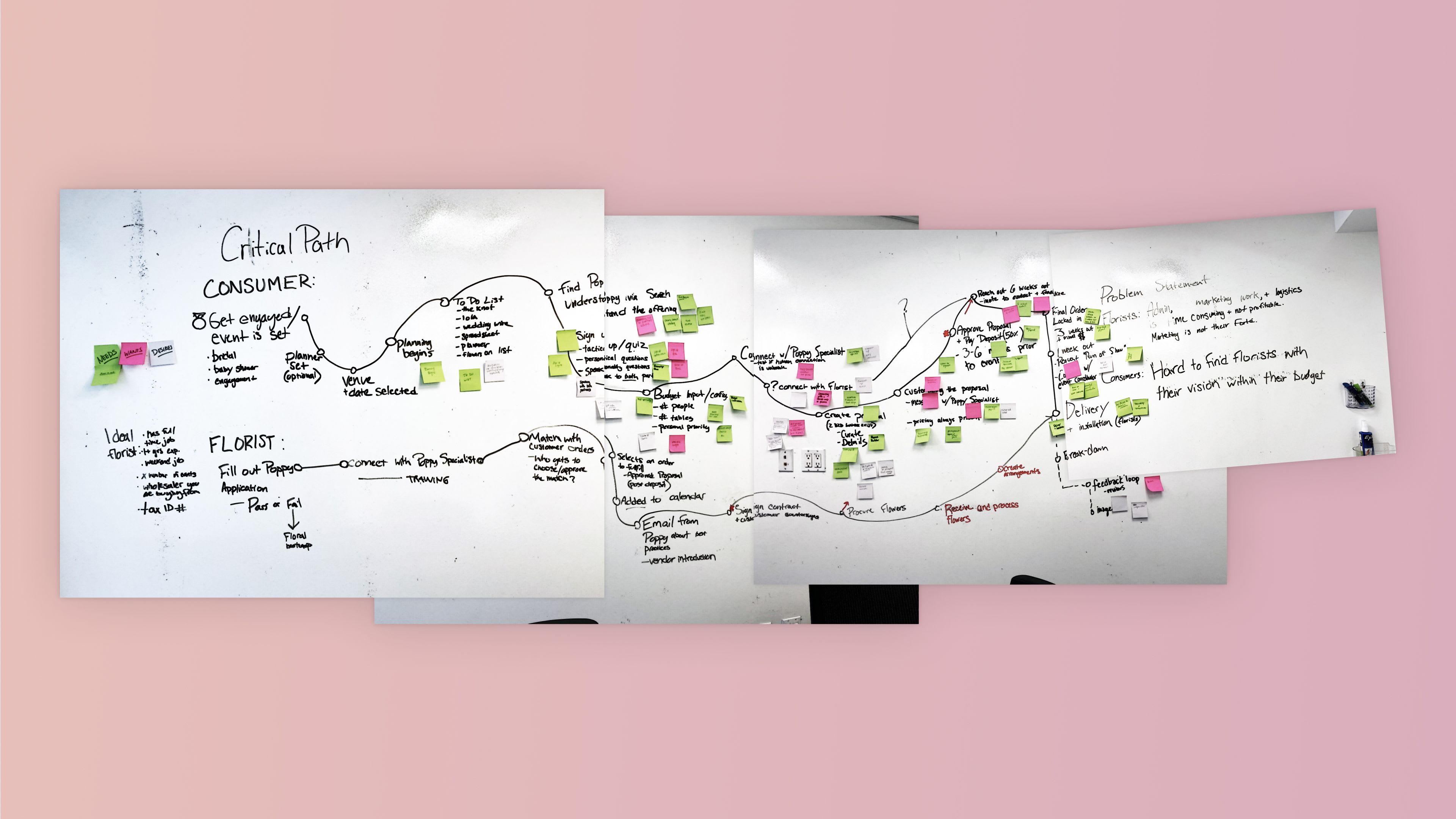
The path was short on purpose. Arrive at the site, choose color and style, describe the venue and the seating, receive the arrangement. That last step included knowing what to do with the flowers once they were delivered, which is the part a storefront usually drops on the floor.
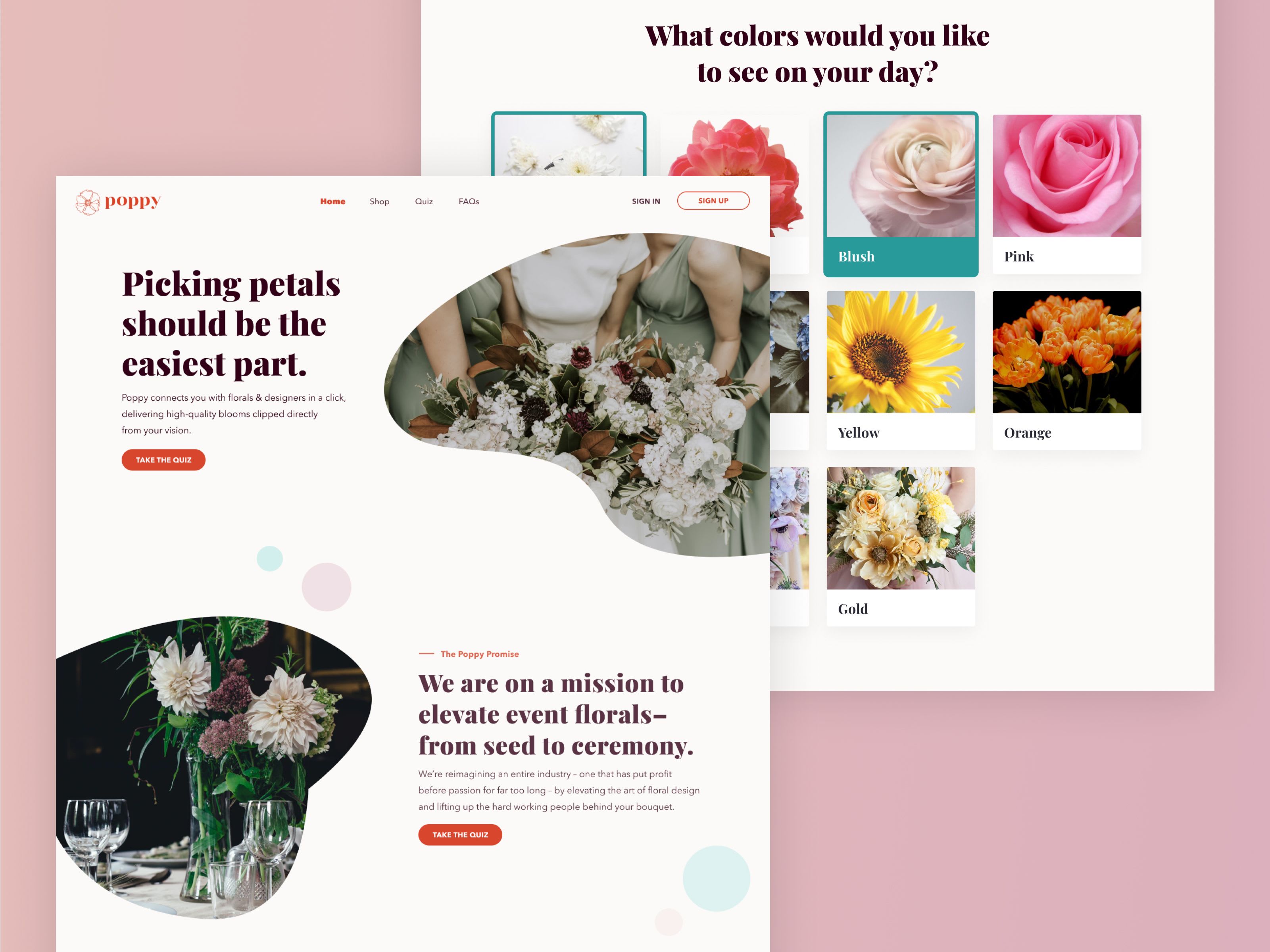
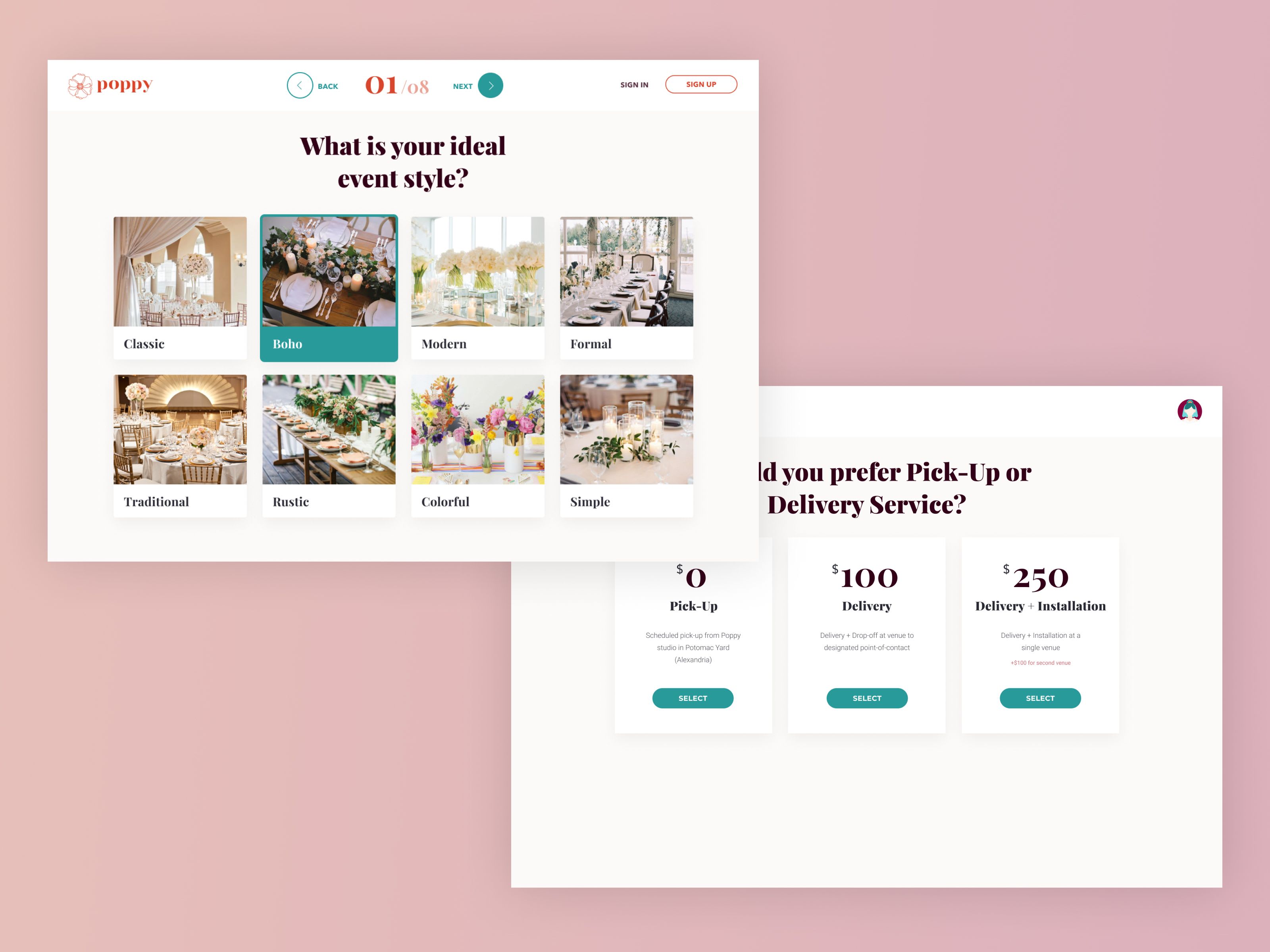
The prototype was built for questions people couldn’t answer yet. I don’t know yet was a first-class answer to a quiz question rather than a dead end. The form asked for rough estimates instead of facts. The document it produced called itself an editable proposal, and it promised a call two months before the wedding to confirm what the day actually needed. Pricing was itemized down to the unit, so the cost stopped being a mystery.
Guidance, not more choice
We tracked seventeen assumptions on one board, each with a way to test it. The eleven about customers came back with a result and a product takeaway, and they all pointed the same way.
Customers didn’t want more choice. They cared about color, style and vibe, not customizing each arrangement, and most would trade customization for a lower price. Most had never seen a picture of their flowers before the day, and they didn’t mind.
What they wanted was guidance. Every customer we spoke to wanted a knowledgeable person as their next step, including the ones on the smallest budgets, which ended the tidy theory that a small budget means someone happy to serve themselves. About half had been let down by their florist’s communication and wanted more clarity, education and transparency. The florists who earned good reviews were the ones who guided people through it.
We had built a quiz to take the florist out of the process. The week told us the florist was the point. The quiz’s job changed from replacing that conversation to preparing for it: quiz, then a mood board, then a design specialist, then a proposal you can edit. Guidance meant the choice was an informed one, with nothing left to surprise anyone on the day.
The board held assumptions about florists too, and the week didn’t need to settle them. Florists already offered these services to their own clients and could flex to meet Poppy, so courting them wasn’t the hard part. The customer side shaped the business model instead: start the conversation at Poppy, hand off to the florist one to six months out, get very good at vetting florists and at that handoff, then let the florist do their job. A board earns its keep by letting you follow new information, not by getting every row answered.
The founder heard it firsthand
Cameron Hardesty was in the room all week and ran some of the research sessions herself, so she heard I would want to talk to someone from customers directly, in sessions she was leading. There was no deck and no persuasion step.
Narrating in the open and having the founder in the room reinforced each other. The narration makes every learning a shared one, and a finding the founder helped produce isn’t one anybody has to sell her afterward.
What the week produced
The sprint ended with a tested critical path, a prototype and a list of next steps for the business plan. Ask for the budget early and show it building as people choose. Offer ways to save money. Turn the quiz’s result into a mood board for the first conversation with a specialist. Send anything that isn’t a wedding straight to the shop. It gave the founder what she needed to make decisions.
“The prototype from our sprint really stood the test of time! We still use so much from that work.”
A prototype is usually the most disposable thing a project produces. It exists to answer a question and gets thrown away once it has. This one was still in use years later.